
Why Gen Z Is Burning Out Before 25 (And How To Gently Push Back)
If you’re in your early 20s and already feel like you’ve run a marathon you never signed up for, you’re not alone.
A lot of Gen Z is exhausted before 25—tired in your bones, constantly anxious, and weirdly numb at the same time. You might be juggling school, work, family pressure, money stress, climate dread, and a brain that won’t shut up… while still feeling like you’re “not doing enough.”
This isn’t just a “you” problem. It’s a whole-system problem landing on your nervous system.
Key Takeaways:
✓ Gen Z isn’t burning out because you’re “too sensitive”—you’re growing up in a time of nonstop stress, uncertainty, and unrealistic expectations
✓ Anxiety and low mood are extremely common in young people, which makes burnout more likely when support and resources are limited
✓ Burnout in your early 20s often looks like numbness, irritability, scrolling, and brain fog—not just working 80-hour weeks
✓ Tiny, repeatable habits (sleep, movement, boundaries, connection) help more than giant “life overhaul” plans when you’re already drained
✓ You can build a gentle wellness routine—even if you can’t afford therapy—using small tools like journaling, habit tracking, and low-pressure support
1. What burnout looks like in Gen Z
Burnout isn’t just “being tired.” It’s what happens when stress keeps stacking up with no real recovery time.
For Gen Z, that stress often starts early and doesn’t really let up.
Studies show that low mood, anxiety and behavioural challenges are among the leading causes of difficulty in adolescents around the world (WHO, 2025). In the U.S., about 33.8% of young adults aged 18–25 had some kind of diagnosed emotional or behavioural condition in 2023—the highest rate of any adult age group (SAMHSA, 2024). That’s the exact age when you’re supposed to be “launching” into adult life.
So if you feel like your brain is already fried before 25, it tracks.
Common burnout signs
Burnout doesn’t always look like a dramatic breakdown. Sometimes it looks like:
- Feeling exhausted no matter how much you sleep
- Constantly doomscrolling but feeling empty after
- Snapping at people over small things
- Losing interest in hobbies you used to love
- Struggling to focus on anything longer than 30 seconds
- Feeling detached, like you’re watching your life instead of living it
Example:
You sit down to work on a simple assignment that should take 20 minutes.
Two hours later, you’ve opened 17 tabs, watched 3 TikToks about productivity, answered zero emails, and now you feel guilty and more tired than before.
That “stuck but wired” feeling? Classic burnout plus anxiety.
Why this hits neurodivergent brains harder
If you have ADHD, anxiety, or other emotional challenges, your brain is already working overtime to do “basic” things—like focusing, switching tasks, or calming down after stress.
- ADHD can make starting tasks feel like pushing a boulder uphill
- Anxiety tells you that boulder is actually a test of your entire worth
- Low mood whispers that there’s no point pushing it anyway
When you stack all that on top of school, work, money, and world chaos, burnout becomes almost inevitable without support.
In summary: Burnout in Gen Z is less “I work 100 hours a week” and more “My brain has been in survival mode for years and now everything feels like too much.”

2. System pressures you didn’t choose
You’re not burning out because you’re weak. You’re burning out because you’re living in a pressure cooker.
Academic and campus pressure
College and early career used to be framed as “the best years of your life.” For many students now, it feels more like a constant performance review.
College surveys during the 2020–2021 year found that over 60% of students met criteria for at least one emotional or behavioural challenge (APA, 2022). At the same time, about two-thirds of college students report not using any campus wellbeing resources at all (American Psychiatric Association, 2023).
So you’ve got:
- High stress
- Limited support
- A culture that still tells you to “push through”
If you’ve ever felt guilty taking a break or skipping a study session even when your brain is screaming for rest—you’re feeling this system up close.
For more on this, you might like our guide on making the most of campus counseling services—especially if asking for help feels awkward.
Money stress and instability
Student debt, rent, groceries, transportation—everything is expensive, and wages haven’t kept up. Many students are:
- Working one or more jobs
- Taking full course loads
- Supporting family emotionally or financially
- Still feeling like they’re falling behind
Untreated anxiety in Gen Z is linked to academic decline, sleep disturbance and increased risk of substance use (Parents Magazine, 2025). Money stress makes all of that worse.
Social media and comparison
You already know social media can be rough on your brain—but the numbers are still wild.
Children and adolescents who spend more than three hours a day on social media have roughly double the risk of experiencing challenges like anxiety and low mood (U.S. Surgeon General, 2025). Nearly half of U.S. teens say they are online “almost constantly” (Pew Research Center, 2024).
That means your brain is:
- Constantly comparing your messy real life to everyone else’s edited highlight reel
- Getting hit with bad news, climate disasters, and political chaos on loop
- Rarely getting true downtime
Moderate use (around 1–3 hours daily) may actually be better for emotional wellbeing than both very low and very high use (Orygen/Mission Australia, 2025). But most of us aren’t in that middle range—we’re in the “scroll until my eyes hurt” zone.
Identity, discrimination, and safety
If you’re LGBTQ+, a person of color, disabled, or from a marginalized community, you’re likely carrying extra layers of stress.
- More than half (56%) of LGBTQ+ youth who wanted care for their emotional wellbeing in the past year couldn’t get it (Trevor Project, 2023)
- LGBTQ+ teens and teens of color are less likely to report getting the social and emotional support they need (CDC/APA, 2023–2024)
When your basic safety, identity, or rights feel constantly debated online and offline, it’s exhausting in a way that’s hard to explain—but your body feels it.
In summary: You’re dealing with academic pressure, money stress, nonstop social media, and identity-based stress—all before 25. No wonder your brain is tired.
3. How burnout shows up in your body and brain
Burnout isn’t just in your head; it’s in your nervous system.
Your stress system on overload
When you’re under constant stress, your body stays in “fight, flight, or freeze” mode:
- Heart rate up
- Muscles tense
- Brain scanning for danger
- Focus narrowed to “what’s the next threat?”
At first, this might look like anxiety: racing thoughts, restlessness, overthinking. Over time, when your brain realizes it can’t keep this up forever, you may shift into:
- Numbness
- Low motivation
- Feeling checked out
- Struggling to care about anything
That “I’m so tired I don’t even have the energy to panic anymore” feeling? That’s your system running out of fuel.
Sleep, screens, and mood
Sleep is one of the biggest quiet factors in burnout. Nearly 80% of adolescents who earn a high grade on healthy sleep behaviours are free of significant low mood symptoms (National Sleep Foundation, 2024). Teens with more severe low mood sleep less on school nights than those with minimal or no symptoms (Saravanan et al., 2024).
Chronic sleep deprivation is linked to more mood swings, irritability and emotional reactivity (National Sleep Foundation, 2024). Add in late-night scrolling and you get:
- Less sleep
- More emotional chaos
- Higher chance of burnout
If you’re curious about building a calmer start to your day, check out our piece on morning routine ideas for managing anxiety.
ADHD, focus, and burnout
If you have ADHD, burnout can look a bit different:
- Hyperfocusing for hours, then crashing
- Forgetting basic tasks but remembering random details
- Feeling ashamed for not being “consistent”
- Needing long “nothing” periods just to function
Your brain is using extra energy to do what other people find simple—like organizing, prioritizing, or switching tasks. That extra effort makes burnout hit faster and harder.
Quick comparison:
| Area | Stress Brain Mode | Burnout Mode |
|---|---|---|
| Energy | Wired but tired | Just tired, all the time |
| Focus | Scattered but anxious | Foggy, hard to care |
| Emotions | Intense and reactive | Flat, numb, or easily irritated |
| Motivation | “I have to do everything” | “What’s the point of anything?” |
In summary: Burnout is your brain and body saying, “We can’t keep doing this like this.” It’s not you failing; it’s your system maxed out.
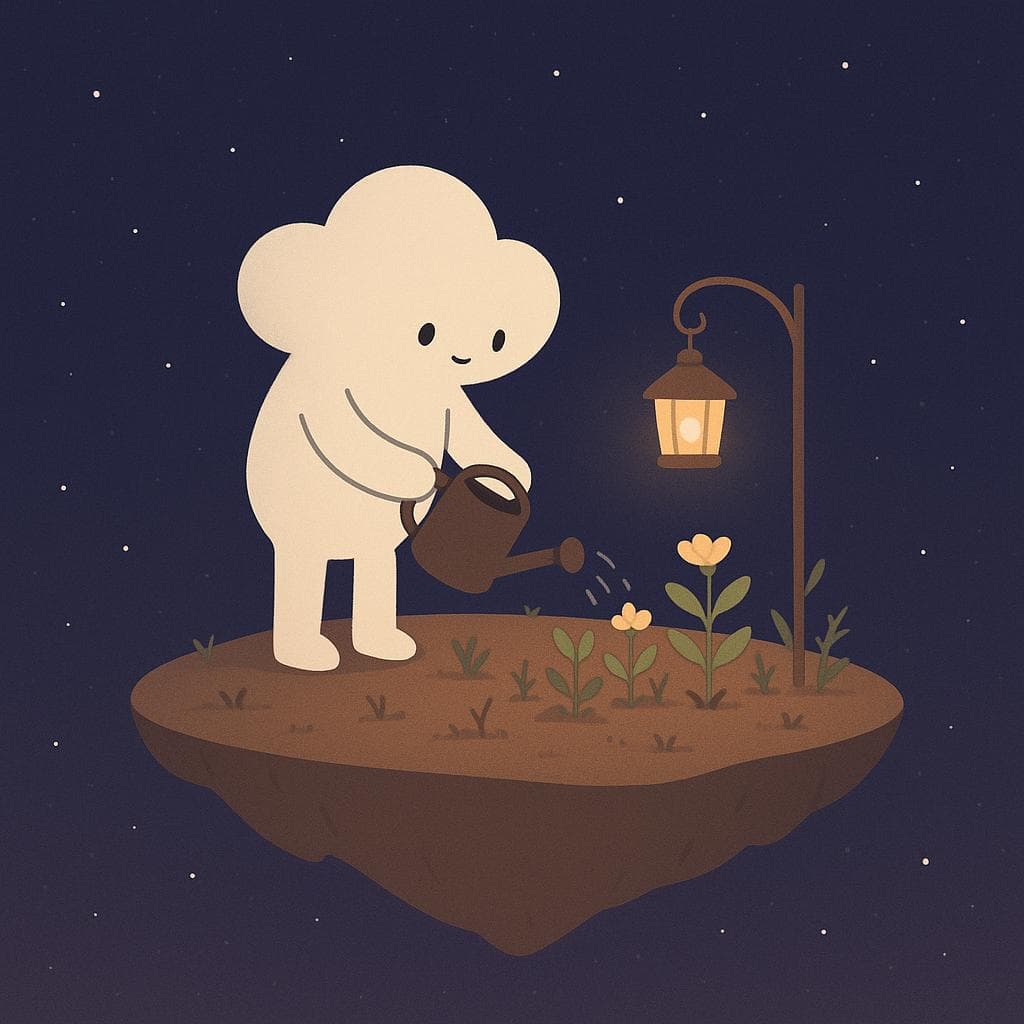
4. Tiny ways to push back against burnout
You don’t need a full 30-step self care routine. When you’re already drained, that just becomes another pressure.
What helps most is tiny, repeatable actions—like watering one plant instead of trying to fix the whole garden at once.
1. Shift into “maintenance mode”
Instead of asking, “How do I become my best self?” try, “What’s the minimum I need to not completely crash?”
Think of three basics:
- Sleep – Not perfect, just a bit more regular
- Food – Not aesthetic meals, just something in your body
- Movement – Not workouts, just a little motion
Example:
✅ “I’ll aim to be in bed by midnight most nights this week, even if I scroll a bit.”
❌ “I’m going to fix my sleep schedule, wake up at 5am, and never touch my phone in bed again.”
Maintenance mode is valid. You’re not lazy—you’re protecting your energy.
If guilt about resting is a thing for you, our article on how to rest when you feel guilty about resting might help.
2. Use micro-movements for stress relief
Exercise helps reduce both low mood and anxiety symptoms in young people (Singh et al., 2025). But when you’re burnt out, “go to the gym” is… not happening.
Try micro-movements instead:
-
Shake it out for 30 seconds
Stand up, shake your arms, roll your shoulders, bounce a little. -
Doorframe stretch
Put your hands on a doorframe, lean forward gently for 10–20 seconds. -
Walk-and-scroll combo
Pace your room or hallway while you scroll for 2–3 minutes. Still movement. -
Song-length movement
Put on one song and move however feels okay—stretching, swaying, light dancing.
You’re not training for anything. You’re just helping your body release a bit of stuck stress.
3. Build “good enough” boundaries
Burnout loves when your boundaries are fuzzy. You say yes to everything, answer messages instantly, and never truly log off.
Try one tiny boundary at a time:
- Put your phone on Do Not Disturb for 20–30 minutes while you study or rest
- Say, “I can’t do that today, but I could help on the weekend”
- Decide one night a week where you don’t make plans
Example:
“Hey, I really want to be there for you, but my brain is at capacity tonight. Can we talk tomorrow instead?”
It might feel selfish at first. It’s not. You’re protecting your limited energy so you can actually show up when it matters.
4. Lower the bar on “self care”
Self care isn’t always candles and hour-long journaling sessions. Sometimes it’s:
- Brushing your teeth but not your hair
- Eating instant noodles instead of nothing
- Replying to one email instead of all of them
If you’re struggling with low mood, remember: behavioural activation—scheduling small, meaningful activities—helps reduce difficult feelings by increasing positive reinforcement (APA, 2023). The activities don’t have to be huge. They just have to exist.
Micro self care ideas (1–3 minutes):
- Drink a glass of water
- Change into clean (not fancy) clothes
- Open a window or step outside for 60 seconds
- Write one sentence in a mood journal: “Right now I feel ___ because ___.”
For a deeper dive into this, check out our piece on how journaling actually helps your wellbeing.
5. Make support more accessible (even if you can’t afford therapy)
Not everyone has money, time, or access for weekly sessions with a therapist. That doesn’t mean you’re stuck with nothing.
Consider:
-
Campus resources
Many campuses offer a limited number of free counseling sessions. Even a few sessions can help you name what’s going on and get tools. -
Peer and group spaces
Support groups, identity-based orgs, or online communities can reduce the “I’m the only one” feeling. -
Low-cost or sliding-scale options
Community clinics, training clinics (where supervised trainees offer lower-cost sessions), and some nonprofits provide reduced-fee support. -
Self-guided tools
- CBT-based workbooks or online exercises
- A simple habit tracker to notice what helps
- A wellness app for college students or young adults that focuses on tiny steps, not perfection
CBT (cognitive behavioural therapy) skills—like noticing unhelpful thoughts, gently challenging them, and taking small actions anyway—have strong evidence for helping with anxiety and low mood in young people (Sigurvinsdóttir et al., 2020; APA, 2023). Digital CBT tools for anxiety also show real benefits (Csirmaz et al., 2024).
If you’re curious about DIY CBT-style skills, we broke some down in CBT techniques you can practice on your own.
In summary: Fighting burnout isn’t about suddenly becoming super-productive. It’s about tiny, sustainable changes that let your nervous system breathe.
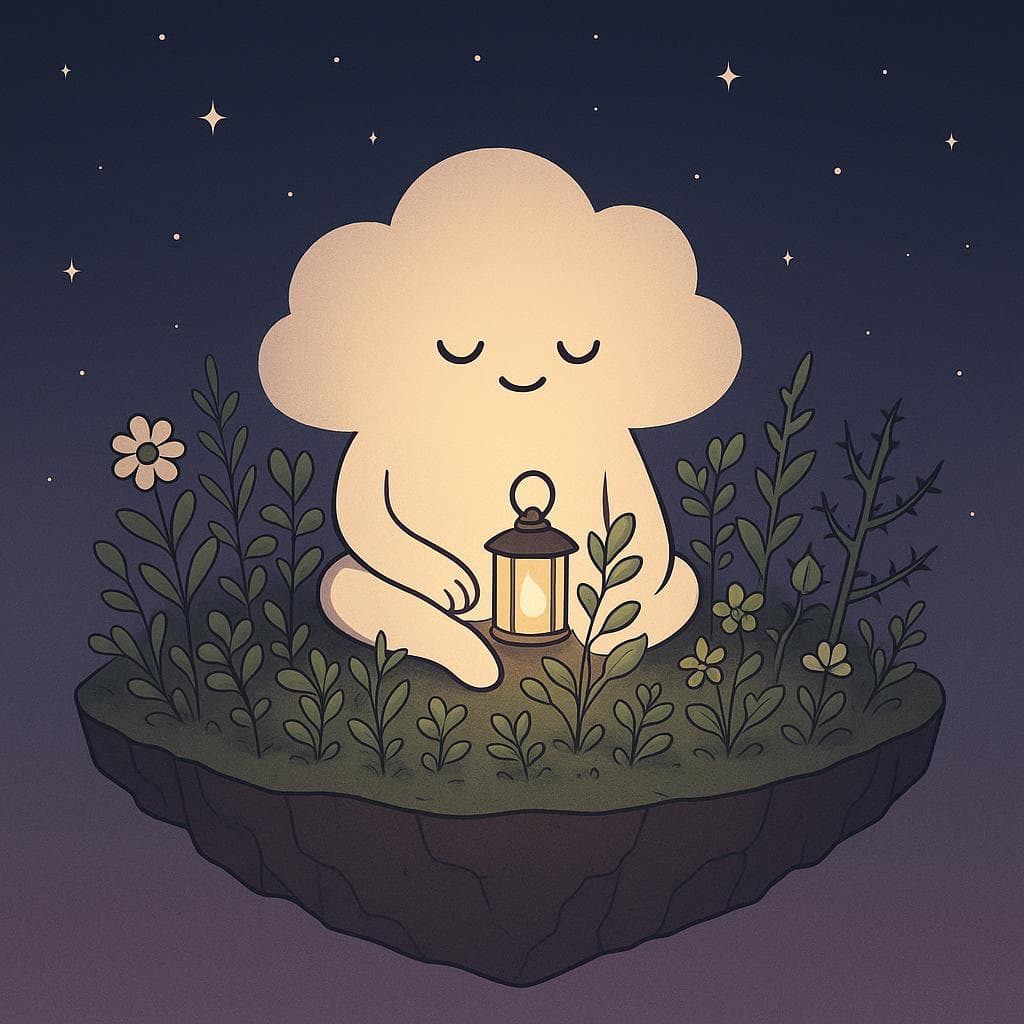
5. Growing something gentler from here
Burnout before 25 doesn’t mean you’re doomed or broken. It means you’ve been trying to grow in soil that’s been overworked, under-watered, and full of weeds that aren’t your fault.
You can’t fix the whole system alone. But you can start tending to your own little patch—slowly.
Quick recap
- Gen Z is facing record levels of anxiety, low mood, and emotional overload in the exact years you’re supposed to be “figuring life out.”
- System-level stuff—money, school, social media, discrimination—makes burnout way more likely, especially if you’re already dealing with ADHD, anxiety, or other emotional challenges.
- Burnout shows up as exhaustion, numbness, irritability, and brain fog—not just grinding 24/7.
- Tiny, repeatable actions (maintenance mode, micro-movement, “good enough” self care, basic boundaries) help more than big, dramatic life plans when you’re already drained.
- There are supports—campus services, low-cost options, self-guided CBT tools, and gentle wellness apps—even if you can’t afford traditional weekly therapy.
One small next step
Pick one of these to try in the next 24 hours:
- Go to bed 20–30 minutes earlier than usual—no perfection, just earlier.
- Do 30 seconds of stretching or shaking out your body between tasks.
- Write a one-line check-in in your notes app: “Today my energy is ___/10; my mood is ___.”
- Put your phone on Do Not Disturb for 20 minutes while you rest or study.
- Send one honest text: “Hey, I’m more burnt out than I’ve been saying. Can we talk sometime this week?”
That’s it. One seed in the ground. You don’t have to fix the whole garden today.
If you want a gentle place to keep track of these tiny actions—a kind of wellness app for students and young adults that feels more like tending a small digital garden than checking off a harsh to-do list—Melo Cares can help you notice and celebrate the little sprouts of progress your tired brain usually forgets.
Note: This article is for general information and support only. It’s not a substitute for professional care. If your anxiety, low mood, or exhaustion are making it hard to get through daily life, reaching out to a counselor, therapist, or trusted healthcare professional can be an important part of tending to yourself.