
Digital Detox: Breaking the Doomscroll Habit
If you've ever looked up from your phone and realized you’ve been scrolling for 45 minutes… on news, drama, or comment wars you don’t even care about… you’re not alone. Doomscrolling is basically a hobby the internet gave us without asking.
You tell yourself, “Just one more video,” and suddenly it’s 1:37 a.m., your chest feels tight, and your brain is buzzing with every terrible thing happening in the world. Sleep? Focus tomorrow? Wrecked.
This isn’t about willpower. It’s about a system that’s literally designed to keep your eyes on the screen—and a brain that’s already dealing with anxiety, ADHD, or low mood trying to survive inside that system.
Key Takeaways:
✓ Doomscrolling is a normal response to stress and uncertainty, but heavy screen and social media use is linked to worse emotional health for many teens and young adults
✓ You don’t need a full “digital detox retreat” to feel better—tiny, 1–5 minute changes can start to break the doomscroll habit
✓ Setting simple boundaries (like “no scrolling in bed” or time-boxed news checks) works better than trying to quit social media completely overnight
✓ Tools like habit trackers, mood journals, and gentle wellness apps can give your brain the dopamine and structure it’s seeking from endless scrolling
✓ You’re not weak for struggling with this—platforms are built to be addictive, especially for anxious and ADHD brains, and you deserve support and kinder systems
1. Why Doomscrolling Feels So Compulsive
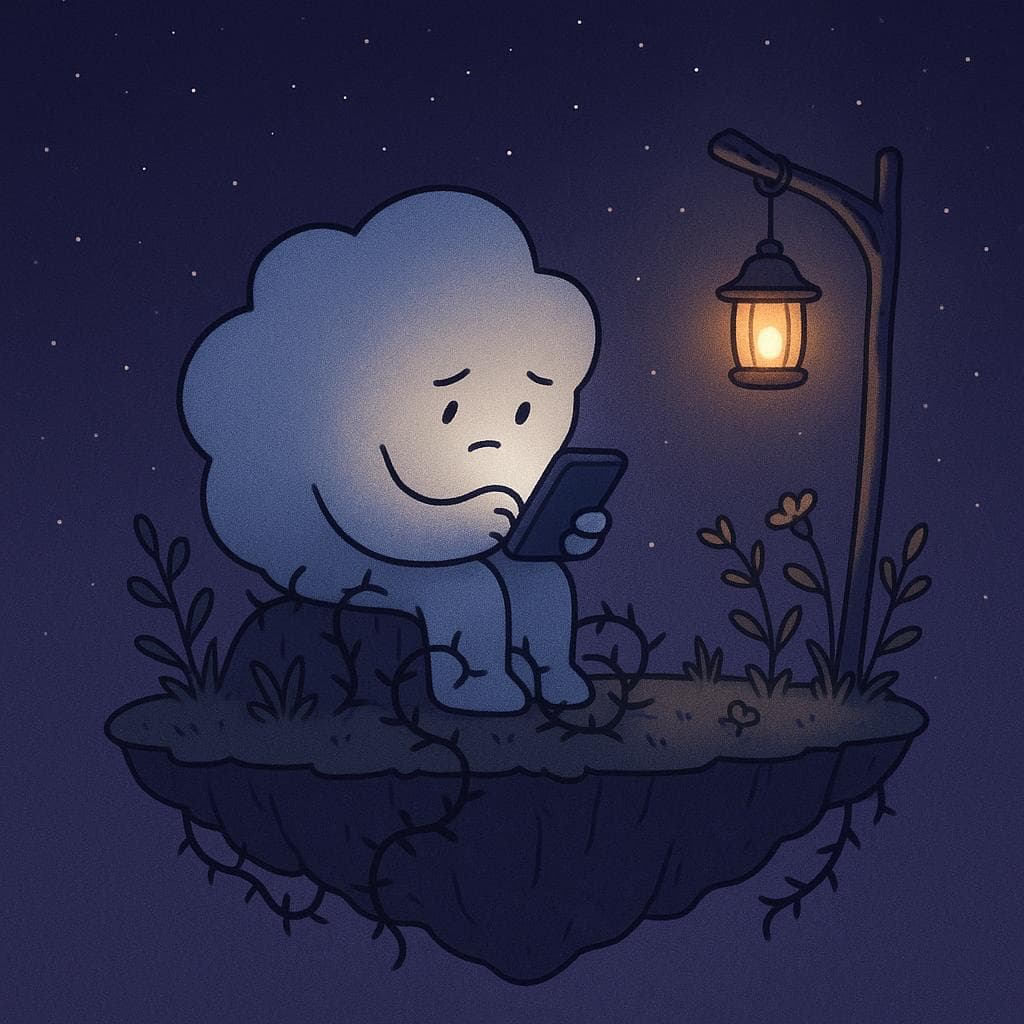
When you’re doomscrolling, it can feel like your thumb has a mind of its own. You know you’ll feel worse after, but you keep going anyway. That’s not you being “addicted to your phone” in some moral-failure way—that’s your nervous system trying to cope.
Your brain on endless feeds
A few things are happening at once:
- Anxiety wants certainty. When the world feels chaotic (news, grades, money, relationships), your brain goes hunting for information to feel safer.
- ADHD wants stimulation. Fast, unpredictable content gives quick dopamine hits—way more than a textbook or a blank Google Doc.
- Low mood wants escape. If your day feels heavy, scrolling is an easy way to zone out without having to move.
Platforms know this. Infinite scroll, autoplay, notifications—these are all designed to keep you there.
Research backs up that this isn’t neutral. U.S. data show that teens with four or more hours of daily screen time are about twice as likely to report anxiety or low mood symptoms compared with those with less screen time, and about 1 in 4 heavy users report recent anxiety or sadness symptoms (CDC, 2024). The U.S. Surgeon General has also warned that kids and teens who spend more than three hours a day on social media have roughly double the risk of experiencing emotional challenges like anxiety and persistent sadness (U.S. Surgeon General, 2025).
You probably don’t need the stats to know this—you’ve felt it in your own body after a late-night scroll spiral.
Why it gets worse at night
Nighttime doomscrolling hits especially hard:
- Your brain is tired, so self-control is low.
- You’re finally alone with your thoughts, so anxiety gets louder.
- Phones are often the only “reward” after a long day of classes, work, or social pressure.
Chronic sleep deprivation then makes everything harder. The National Sleep Foundation notes that poor sleep in teens is linked to more mood swings, irritability, and emotional reactivity, which can mimic or worsen emotional challenges (National Sleep Foundation, 2024). Nearly seven in ten teens who are dissatisfied with their sleep report elevated difficult feelings.
So doomscrolling isn’t just “too much phone time.” It’s a loop:
Stress → scrolling → worse sleep → more anxiety/low mood → more scrolling.
It’s not just you
According to Pew, nearly half of U.S. teens say they are online “almost constantly” (Pew Research Center, 2024). An APA survey found that 37% of teens spend five or more hours a day on social media, and heavy users report worse emotional health than lighter users (APA, 2024). Many young adults are in the same boat—phones are basically an extra limb.
In summary:
- Doomscrolling is a nervous system survival strategy, not a personal flaw.
- Heavy, unstructured screen time is strongly linked to worse emotional health and sleep.
- Your brain is reacting normally to an environment that’s not built for your wellbeing.
You’re not broken. The system is.
2. Spotting Your Doomscroll Triggers
You can’t change what you don’t notice. The first step in a digital detox isn’t deleting every app—it’s getting curious about when and why you spiral.
Common doomscroll moments
Some classic doomscroll “entry points”:
- In bed: “I’ll just check one thing,” then suddenly it’s 2 a.m.
- Between tasks: You open your phone “for a sec” instead of starting the next assignment.
- After bad news: A grade, a text, a family fight, world events—you go looking for more info or distraction.
- When you feel lonely: You scroll to feel connected but end up feeling worse.
Example:
You open TikTok after a stressful study session “just to decompress.”
Thirty-five minutes later, you’ve watched three breakup storytimes, two climate disaster videos, and a thread about how nobody can afford housing. Your heart’s racing, you feel hopeless about the future, and your homework still isn’t done.
Nothing changed in your actual life during those 35 minutes—your emotional state just took a hit.
Micro self-check: The 3 Qs
Before (or during) a scroll, ask yourself:
- What am I feeling right now? (bored, anxious, lonely, numb)
- What am I hoping this scroll will do? (distract me, make me feel less alone, give me info)
- Is there a smaller, kinder way to get that? (text a friend, stretch, read one actual article instead of 50 hot takes)
You don’t have to stop scrolling every time. Just asking these questions plants a seed of awareness.
Quick mood + screen table
Use this simple table as a mental check-in:
| Before Scrolling I Feel | After 20+ Minutes I Usually Feel | Tiny Alternative To Try First |
|---|---|---|
| Anxious | More anxious, wired | 3 slow breaths, then decide |
| Lonely | More disconnected | Send 1 “hey” text |
| Bored | Foggy, time-blind | Stand, stretch 30 seconds |
| Low mood | Heavier, hopeless | Step outside for 2 minutes |
You can still scroll after the tiny alternative if you want. The point is: you chose, instead of your thumb choosing for you.
3. Tiny Digital Detox Steps
You do not need a full “no screens for 30 days” challenge. For ADHD, anxiety, or low mood, extreme rules usually backfire. What helps more is small, specific tweaks that make doomscrolling just a bit less easy.
Each of these can be done in under 5 minutes.
Move one app, don’t delete it
Instead of deleting TikTok/Instagram/X:
- Move the app off your home screen.
- Put it in a folder called something like “Later” or “Are You Sure?”
This adds a tiny bit of friction. Your thumb can’t autopilot as easily.
Example:
You pick up your phone and your muscle memory goes to where Instagram used to be.
It’s not there. You pause for half a second and think, “Do I actually want to open it right now?” Sometimes the answer is yes. Sometimes that pause is enough to choose something else.
Create one “no-scroll zone”
Pick one place or time that’s scroll-free. Start small:
- In bed
- At the dining table
- First 10 minutes after you wake up
- First 10 minutes when you get to class or work
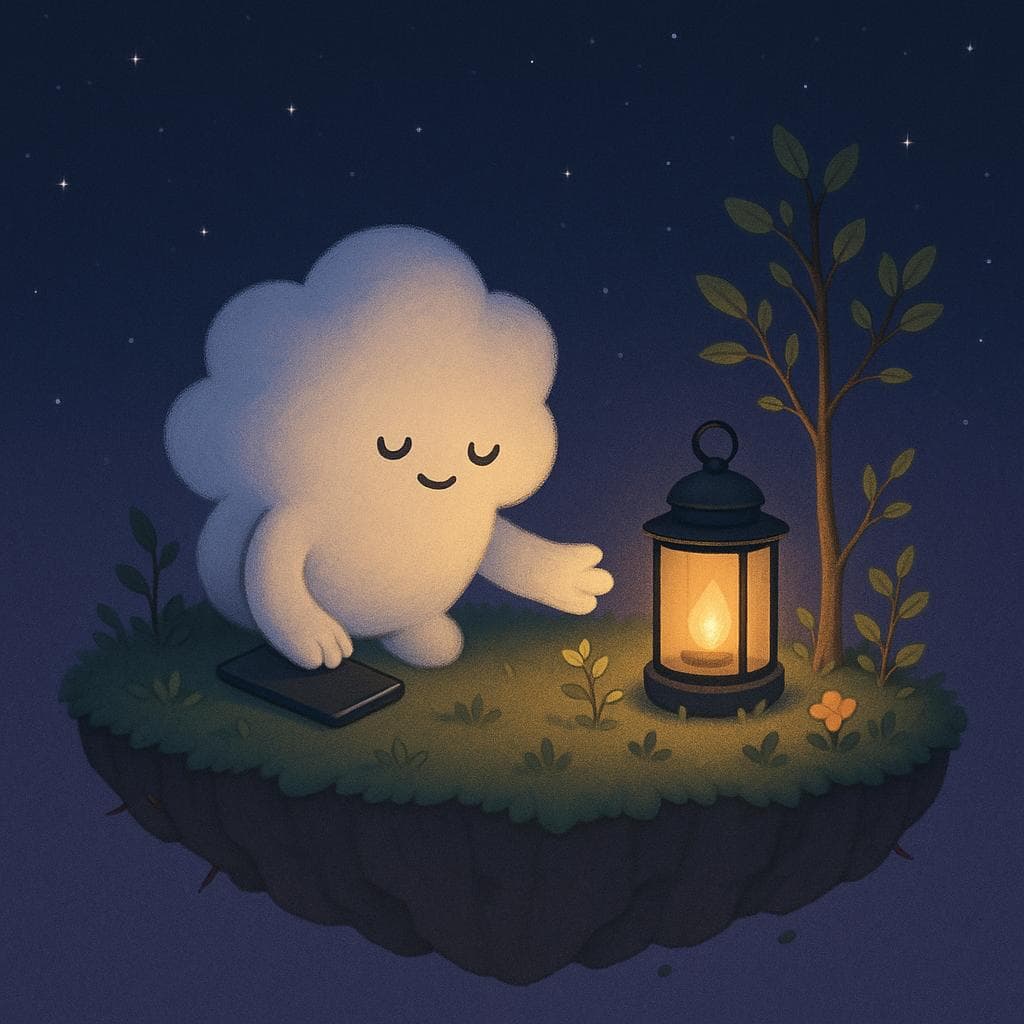
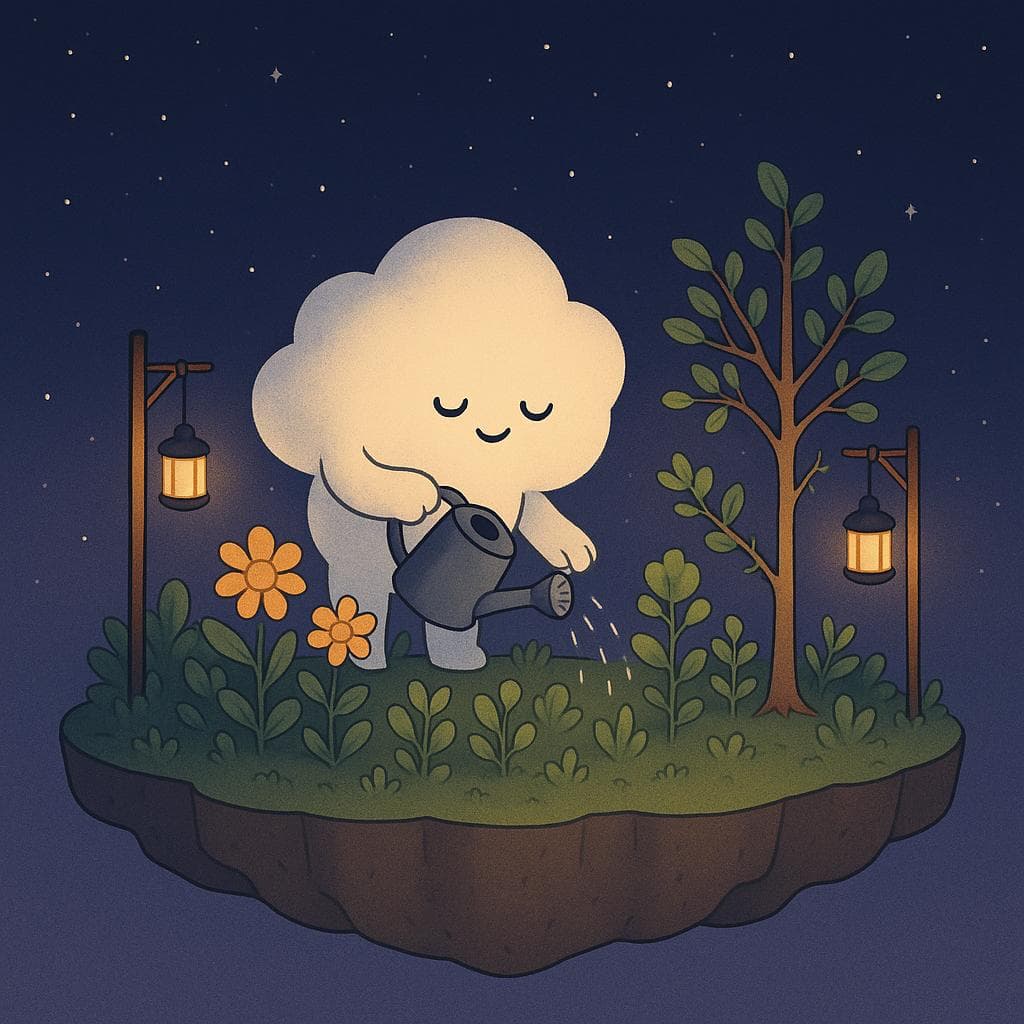
You’re not banning scrolling from your life; you’re just protecting one tiny patch of your day—like fencing off a corner of the garden so it can regrow.
Time-box your doomscroll
If cutting back feels scary, try containing it.
- Decide on a time block: 10–20 minutes.
- Set a timer.
- Scroll guilt-free until the timer goes off.
- When it rings, do one grounding action (stand up, drink water, stretch).
This turns endless scroll into a conscious choice instead of a time warp.
Turn off 10% of notifications
You don’t have to go full “Do Not Disturb always.” Just:
- Turn off notifications for 1–2 apps that stress you out most (news, email, certain social platforms).
- Keep messages or important ones on.
Every notification is a tiny “pay attention to me” tug on your nervous system. Reducing them is like lowering the noise level in your brain.
Swap one scroll with one micro-ritual
Pick a scroll-heavy moment (like right before bed) and swap just the first minute with something else:
- Light stretches
- Wiping your face with a warm washcloth
- Writing one line in a mood journal: “Today my brain feels ___.”
You can still scroll after if you want. The win is: you showed your brain another way to soothe itself.
4. Calming Anxiety Without Doomscrolling
A lot of doomscrolling is really “how to deal with anxiety” in disguise. Your brain is trying to:
- Predict bad things so it can prepare
- Numb out from stress
- Feel less alone by seeing other people’s experiences
Let’s give it other ways to get those needs met.
Simple nervous system resets
When you feel the urge to drown in your feed, try one of these 1–3 minute resets first:
Ground with 5–4–3–2–1
Name:
- 5 things you can see
- 4 things you can touch
- 3 things you can hear
- 2 things you can smell
- 1 thing you can taste
This pulls your brain out of the doom spiral and back into your actual room.
Breathe in boxes
Box breathing is simple:
- Inhale for 4 counts
- Hold for 4
- Exhale for 4
- Hold for 4
Repeat 3–4 times. That’s it. You’ve just sent your body a “we’re safe enough” signal.
Move your eyes, not your thumb
Instead of scrolling, try:
- Looking out a window and tracking one object (a tree, a car, a cloud) for 30–60 seconds.
- Slowly turning your head left to right, letting your eyes follow.
This side-to-side movement can help calm your nervous system in a similar way to some therapy techniques, without needing anything fancy.
ADHD brains and stimulation
If you have ADHD, a lot of doomscrolling is about stimulation, not just avoidance. Your brain is craving:
- Novelty
- Quick rewards
- Easy tasks
So give it those—but in ways that don’t wreck your mood.
Tiny swaps:
- Instead of 20 minutes of random videos → 3 minutes of a favorite song + dance break
- Instead of scrolling in lecture → doodling, fidgeting, or taking messy notes
- Instead of reading 50 takes on a news story → one clear article, then a 2-minute break
You’re not taking away stimulation; you’re choosing versions that don’t leave you feeling fried.
5. Building Healthier Screen Routines
You don’t need a perfect “digital wellness routine.” You just need a few gentle structures that make the healthier choice slightly easier.
Morning and night bookends
We’ve got a whole post on morning routine ideas for managing anxiety, but here’s the short version for screens:
At night:
- Pick a “last scroll” time (example: 11:30 p.m.).
- After that, switch to low-stimulation activities:
- music
- a podcast
- light reading
- stretching
In the morning:
- Try a 5-minute “phone-free” window:
- Drink water
- Open your curtains
- Sit up and take 3 slow breaths
Even five minutes without doomscrolling at the start and end of your day can shift how your whole day feels.
Digital boundaries with yourself
Boundaries aren’t just for people—they’re for apps too.
Some examples:
- “I don’t read comment sections after 10 p.m.”
- “I don’t follow accounts that make me feel worse about my body, money, or future.”
- “I only check news twice a day, not every hour.”
Use emoji to check your gut:
- ❌ “Everyone else has their life together. I’m failing.”
- ✅ “This account reminds me I’m not alone in struggling.”
If an account consistently makes you feel smaller, angrier, or more hopeless, that’s data. Mute, unfollow, or at least hide them from your feed.
Using tools, not willpower
If you’re already tired, expecting pure willpower to beat the doomscroll algorithm is unfair. Use tools:
- Built-in screen time limits
- Greyscale mode at night (less visually rewarding)
- Website blockers on your laptop during study time
These are like putting a gate around a part of your garden—not because plants are evil, but because some things (like weeds) spread fast if you don’t contain them.
For more ideas on building routines that actually stick, you can check out our guide on creating a wellbeing routine that doesn’t collapse in week two.
6. When Scrolling Hurts Your Mood
Digital detox isn’t just about time—it’s about impact. For some people, 2 hours of memes with friends feels fine. For others, 15 minutes of news at midnight tanks the whole night.
Signs your scroll is hurting more than helping
You might need stronger boundaries if:
- You regularly lose track of hours and miss sleep.
- You close the app feeling more anxious, hopeless, or angry.
- You compare your life to others and always feel worse.
- You avoid responsibilities until they become crises because scrolling is easier.
- You feel physically tense (tight chest, clenched jaw) while you scroll.
National data show that from 2013 to 2023, the share of U.S. high school students reporting persistent sadness or hopelessness rose from about 30% to about 40% (CDC, 2024). At the same time, nearly half of teens say they’re online “almost constantly.” It’s not that phones caused everything, but they’re definitely part of the emotional weather you’re living in.
If you’re already feeling low
If you’re dealing with persistent sadness or low energy, doomscrolling can feel like the only thing you have energy for. It makes sense—lying still and moving your thumb is way easier than starting an assignment or texting someone back.
But low mood plus heavy social media is a rough combo. Teens with more than three hours a day on social platforms have about double the risk of experiencing emotional challenges like low mood and anxiety (U.S. Surgeon General, 2025).
If that’s you, think “maintenance mode,” not perfection:
- Protect sleep as much as you can.
- Add one non-screen activity to your day (a short walk, a shower, making tea).
- Use your phone for support (music, meditation, journaling apps) instead of only doomscrolling.
We also have a post on what to do when you’re feeling too low to do basic self-care if you need micro-steps.
When extra support helps
If:
- You feel stuck in a constant loop of low mood, anxiety, and doomscrolling
- Basic things like eating, showering, or going to class feel impossible most days
- Your screen habits are wrecking your sleep, grades, or relationships
…that’s a sign it might be time to loop in more support—like a campus counselor, a trusted adult, or a therapist if that’s available to you. Many college counseling centers are free or low-cost, and some offer workshops specifically about digital overwhelm and anxiety. We’ve broken down how to navigate those services in this real guide to using campus counseling.
This article is supportive information, not a replacement for professional care. If things feel especially heavy, reaching out for personalized support is a strong, valid move—not a failure.
7. Bringing It All Together
You don’t have to become a “no phone” person to feel better. Breaking the doomscroll habit is about:
- Noticing when and why you spiral
- Adding tiny bits of friction (moving apps, time-boxing, no-scroll zones)
- Giving your anxious or ADHD brain other ways to get stimulation and comfort
- Protecting your sleep and energy as much as you can
One small next step you can try today:
Tonight, pick one of these:
- Move one social app off your home screen.
- Set a 15-minute timer for your next scroll and stop when it rings.
- Make your bed or desk a “no-scroll zone” for just 24 hours.
That’s it. Not a full digital detox. Just one fence post in the ground.
If you’d like a gentle place to track these tiny wins—like “stopped scrolling at midnight” or “did 3 minutes of breathing instead of TikTok”—a wellness app like Melo Cares can help you tend to yourself, turning each small choice into a visible sprout in your own digital garden.
You deserve a relationship with your phone that doesn’t drain you. One tiny change at a time is more than enough.