
Wellbeing Apps With a Bird: Why Finch and Similar Apps Work
If you’ve ever thought, “Why am I emotionally attached to a tiny digital bird?”, you’re not alone.
Apps like Finch blew up because they hit something deep for a lot of us—especially if you’re a student with anxiety, ADHD, or just a brain that’s tired all the time. On the surface it’s a cute self care pet. Underneath, it’s a sneaky combo of psychology, game design, and emotional support.
This guide breaks down why these bird-themed wellness apps work, where they fall short, and how to use them in a way that actually supports your wellbeing instead of becoming just another thing to feel guilty about.
Key Takeaways:
✓ Bird-themed wellness apps work because they mix emotional support, gamified habit tracking, and low-pressure self care in a way your dopamine-starved brain actually responds to
✓ For anxious or ADHD brains, caring for a virtual pet can feel easier than caring for yourself—then slowly becomes a bridge back to tending to your own needs
✓ These apps are not a full therapy alternative, but they can be a powerful support tool if you can't afford therapy or are stuck on waitlists
✓ The biggest trap is turning them into another perfection project—using them in “maintenance mode” with tiny, 1–3 minute tasks makes them way more sustainable
✓ You’ll get the most benefit when you connect in-app tasks to real-life support systems like sleep, movement, and gentle CBT-style reflection
When people say Gen Z is “too online,” they usually skip the part where a lot of you are quietly using your phones to cope—tracking moods, building tiny routines, trying to figure out how to deal with anxiety between classes and shifts.
College surveys show that over half of students report at least one significant emotional challenge during the year, and many never get formal support (American Psychiatric Association, 2022; 2023). At the same time, about two-thirds of students say they don’t use campus counseling at all—even when they’re struggling (American Psychiatric Association, 2023).
So it makes sense that “soft,” low-pressure tools like virtual pet self care apps took off. They’re on your phone, they’re not intimidating, and they don’t ask you to spill your whole life story to a stranger.

1. Why bird wellness apps feel so comforting
Let’s start with the obvious question: why a bird?
Finch and similar apps could’ve picked any mascot. But a small bird hits a very particular vibe: fragile but hopeful, shy but curious, tiny but growing. That’s… kind of how a lot of people feel inside when they’re dealing with anxiety or low mood.
Emotional attachment, on purpose
These apps are designed so you start caring about the bird quickly:
- It has a name and personality
- It “reacts” to how you’re doing
- It grows as you complete tasks
For a brain dealing with low mood or ADHD, your own needs can feel distant or not worth the effort. But a small, external “creature” that relies on you? That can feel easier to show up for.
Example:
You’re exhausted and your anxiety is yelling that you “wasted the whole day.”
You don’t have the energy to clean your room, but you do have just enough in the tank to open the app and “check on your bird.” You log one tiny win: “I drank water.” The bird levels up. You get a small hit of “I did something.”
That small feeling of “I did one thing” is not fake. It’s a real shift in your brain’s reward system—especially important when low mood makes everything feel pointless.
Why this hits ADHD and anxiety so hard
If you have ADHD, you probably know the struggle of:
- Needing quick feedback
- Getting bored by long-term goals
- Forgetting what you actually did today
A virtual pet wellness app gives:
- Immediate visual rewards (your bird grows, the screen changes)
- Short, clear tasks (“write one gratitude,” “take 3 breaths”)
- A log of your wins, even when your memory says, “You did nothing”
For anxious brains, the non-judgmental vibe matters. There’s no teacher or parent energy, just: “Hey, want to do one tiny thing?” That can be a huge difference when you’re already hard on yourself.
The bigger context: you’re not alone
Youth emotional struggles are not just “a you problem.” Globally, low mood, anxiety and behavioral challenges are among the leading causes of difficulty in adolescents (WHO, 2025). In the U.S., nearly 1 in 5 adolescents report recent anxiety symptoms (CDC, 2025), and about 40% of high school students report persistent sadness or hopelessness (CDC, 2024).
So if a tiny cartoon bird is one of the few things that makes it feel even a bit easier to get through the day—that’s not silly. That’s your brain finding a tool that works in a rough system.
2. What these apps actually do under the hood
Bird-themed wellness apps look cute, but they’re quietly doing several things at once: habit tracking, mood journaling, and emotional support.
Habits, but gamified
Traditional habit trackers often feel like this:
❌ “Do your full morning routine every day or lose your streak.”
For a lot of people with ADHD or low mood, that’s a recipe for shame and then avoidance.
Virtual pet wellness apps flip it to:
✅ “Feed your bird by doing one tiny action—any action counts.”
That shift matters. Instead of perfection, the focus is on progress.
Common features you’ll see:
- Tiny tasks: Drink water, stretch for 30 seconds, send one text
- XP / points: Your bird grows as you complete them
- No huge penalties: Missing a day doesn’t “kill” your progress
Mood journaling without the pressure
A lot of these apps sneak in mood journaling in ways that feel less intense than a blank page:
- Quick mood check-ins with emojis or sliders
- Short prompts like “What’s one thing you’re proud of?”
- Space to write, but no pressure to write a lot
If you want a deeper dive into how this helps, we break it down more in how journaling actually helps your wellbeing.
Gentle CBT-style reflection
Some apps borrow from CBT (cognitive behavioral therapy) without calling it that. CBT skills are strongly supported for anxiety in young people (Sigurvinsdóttir et al., 2020; APA practice guides, 2022–2025), and digital CBT tools for youth have been shown to help (Csirmaz et al., 2024).
You might see prompts like:
- “What thought stressed you out today?”
- “Is there another way to look at this?”
- “What’s one small thing you can do next?”
That’s CBT in baby-step form—helping you notice your thoughts, not just drown in them.
3. Why they help when you can’t afford therapy
Let’s be honest: a lot of people are turning to wellness apps because getting formal support is hard or expensive.
The access problem
Some context from the approved stats:
- About 1 in 5 adolescents in the U.S. have a diagnosed emotional or behavioral condition (HRSA, 2024)
- Around 20% of adolescents report having unmet care needs in the past year (CDC, 2025)
- Over half of LGBTQ+ youth who wanted care couldn’t get it (Trevor Project, 2023)
College students deal with similar gaps. Many campuses have long waitlists, limited session caps, or counselors who don’t fully understand ADHD, cultural background, or queer identity.
So when people search “therapy alternative” or “can’t afford therapy,” apps like Finch pop up as something—maybe not everything, but something.
What bird apps can realistically offer
They can be especially helpful for:
- Building basic routines when you’re overwhelmed
- Tracking mood patterns so you can see what actually helps
- Practicing tiny CBT skills like reframing thoughts
- Feeling less alone when your brain is loud at 1 a.m.
They can be a great bridge:
- While you’re on a waitlist
- Between therapy sessions
- When you’ve finished counseling but still want structure
What they can’t replace
These apps are not:
- A full replacement for therapy or counseling
- A crisis resource
- A substitute for medical care, if that’s something you and a provider decide you need
Think of them as one tool on your shelf. Helpful, sometimes powerful—but not the entire toolbox.

4. How to make these apps actually work for you
Downloading a wellness app is easy. Using it in a way that supports your emotional wellbeing without burning you out—that’s the real skill.
Here are some practical ways to make bird-style wellness apps work with your brain, not against it.
Start in “maintenance mode”
When you’re struggling, your goal is not “become the most optimized version of myself.” It’s “keep myself going without collapsing.”
Try this rule: no task should take more than 3 minutes.
Possible 3-minute-or-less tasks:
- Drink a glass of water
- Stand up and stretch your arms
- Open the window for 30 seconds
- Reply to one low-stakes message
- Write one sentence in your mood journal
If the app suggests something big like “clean your whole room,” break it down:
✅ “Put three things in the trash.”
✅ “Move clothes from bed to chair.”
✅ “Clear one corner of my desk.”
Use the app to support your nervous system
A lot of emotional struggles show up in your body first—racing heart, tight chest, heavy limbs. Apps can help you build tiny body-based rituals.
You can create or choose tasks like:
- “Do one 4-4-4 breath” (inhale 4, hold 4, exhale 4)
- “Look away from screens for 60 seconds”
- “Step outside or look out the window”
This lines up with CBT and behavioral activation ideas: small, meaningful actions can slowly shift mood (APA, 2023).
Connect it to real-life supports
Apps are powerful, but they work best when they nudge you toward offline support.
You could use tasks like:
- “Text one friend I trust”
- “Check my campus counseling page” (even just to see hours)
- “Ask a roommate if they want to eat together”
If you’re curious about getting more out of campus support, we have a guide on making the most of campus counseling services.
5. ADHD, anxiety, and the perfectionism trap
Here’s where things can get messy: the same brain that loves the cute bird can also turn the app into another reason to feel like you’re failing.
Common traps
| Trap | How it shows up | Gentler reframe |
|---|---|---|
| All-or-nothing thinking | “I missed a day, I ruined everything.” | “Today didn’t happen. That’s neutral, not failure.” |
| Overloading tasks | 15 goals added at once | 1–3 tiny goals max per day |
| Comparing progress | “Everyone else is leveling up faster.” | “My brain, my pace.” |
| Shame spiral | “If I can’t do app tasks, I’m hopeless.” | “If I’m this stuck, I probably need more support.” |
Tiny rules that protect your energy
You’re allowed to set rules that make the app work for you:
-
No streak worship.
If you miss days, you can simply say: “My brain needed rest.” -
Cap your daily tasks.
3–5 max is plenty, especially if you have ADHD. -
Count “invisible” wins.
Add tasks like “Got out of bed,” “Showered,” “Ate something,” even if they feel basic. Low mood makes these genuinely hard. -
Use it as a log, not a judge.
The app records what happened. It doesn’t define your worth.
6. When a bird app is especially helpful (and when it’s not)
These apps shine in some situations and fall short in others. Knowing the difference helps you use them wisely.
Times they’re especially helpful
- During transitions: Starting college, moving, new job, breakups
- When your schedule is chaos: Rotating shifts, multiple part-time jobs
- If you’re neurodivergent and forgetful: ADHD brains often benefit from visual, gamified reminders
- When you feel disconnected: Caring for a virtual pet can be a soft way back into caring for yourself
They can also help you notice patterns:
- “My mood drops every time I sleep under 6 hours.”
- “I always feel a bit better after walks, even if my brain says they’re pointless.”
Sleep is a big one—nearly seven in ten teens who are dissatisfied with their sleep report elevated difficult mood symptoms (National Sleep Foundation, 2024), and chronic sleep deprivation is linked to more mood swings and irritability (National Sleep Foundation, 2024). A wellness tracker that nudges you toward more consistent sleep can quietly do a lot.
Times they might not be enough
There are seasons when a wellness app is a helpful sidekick—but not the main support you need.
Some signs you might need more than an app:
- Basic self care (eating, showering, getting out of bed) feels impossible most days
- You’ve felt persistently down or empty for weeks
- Anxiety is making it hard to attend class, work, or social stuff
- You’re noticing big changes in sleep, appetite, or concentration that won’t let up
National data suggest that many young people experience emotional struggles for years before getting support—there’s often around an 11-year delay between first symptoms and first treatment contact (Wang et al., 2004; APA summaries, 2024). You don’t have to wait that long to deserve help.
A gentle reminder: apps are tools, not cures. If you’re in a particularly tough season, reaching out to a therapist, counselor, doctor, or trusted adult is a strong, valid move—not a sign you “failed at self help.”
7. Turning app wins into real-life change
The goal isn’t to become the best bird caregiver on Earth. It’s to let those tiny in-app wins spill over into your actual life.
Use the app as a mirror
Instead of asking, “Did I do enough tasks?”, try:
- “What helped me feel 1% better this week?”
- “What always makes me feel worse?”
- “Is there a pattern with sleep, food, or social stuff?”
You can even do a weekly check-in with yourself:
Example:
“This week, every time I walked for 5 minutes, my mood rating went up a bit. Maybe I don’t need a full workout—just more tiny walks.”
That’s you doing real emotional research on your own life.
Let small actions grow slowly
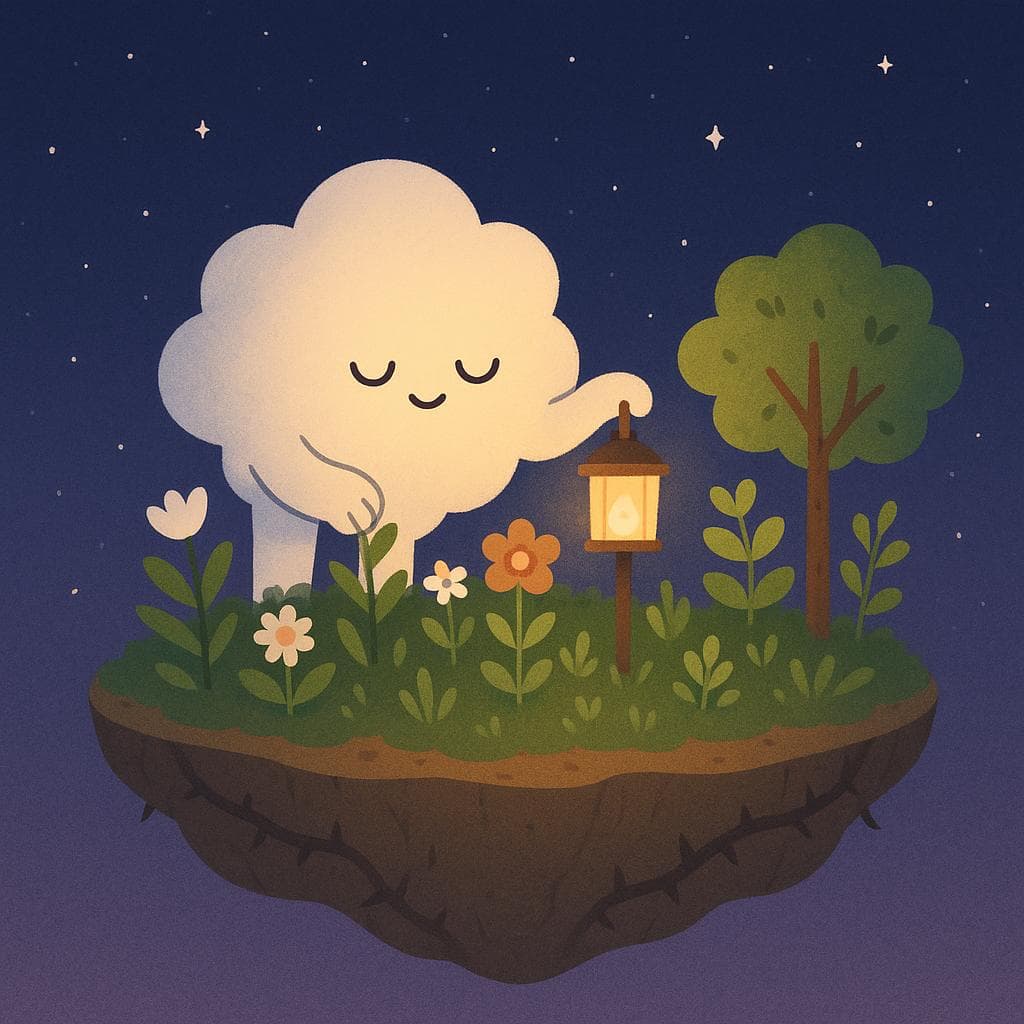
Think of your routines like a garden:
- At first, you’re just trying to keep one plant alive
- Then maybe you add another tiny sprout
- Some weeks you water less—and that’s okay
- Over time, you learn what each plant needs
Your wellness routine can grow the same way:
- Start with one anchor habit (like a 1-minute stretch after you wake up).
- When that feels automatic, add another tiny seed (like filling your water bottle at the same time).
- Let the app track these, not to judge you, but to help you remember: “I am tending to myself, even when it feels small.”
If you want more ideas on building gentle routines without burning out, you might like our piece on what burnout looks like in Gen Z or our guide to morning routine ideas for managing anxiety.
8. Conclusion: Use the bird, but don’t forget the human
Wellbeing apps with a bird work because they understand something simple and true: it’s often easier to care for something outside of you than it is to care for yourself. And once you start, that care can gently loop back around.
If you’re using Finch or another virtual pet self care app, you’re already doing something meaningful:
- You’re tracking your wins in a world that mostly tracks your failures
- You’re giving your anxious or ADHD brain little bits of dopamine that aren’t just from doomscrolling
- You’re practicing tiny acts of self-respect, even on the days you feel like you don’t deserve it
Your next small step could be simple: open your app, pick one 1–3 minute task that feels doable, and let that be enough for today. Then notice how it feels—not “fixed,” but maybe 1% more grounded.
If you’d like a gentle place to plant those tiny actions and actually see your progress grow over time, Melo Cares offers a soft garden-style wellness app that helps you tend to yourself one small sprout at a time.
Note: This article is for information and support only and isn’t a substitute for professional care. If you’re going through a difficult period or your symptoms are getting in the way of daily life, it can really help to talk with a therapist, counselor, or healthcare provider for more personalized support.